I Switched and So Can You

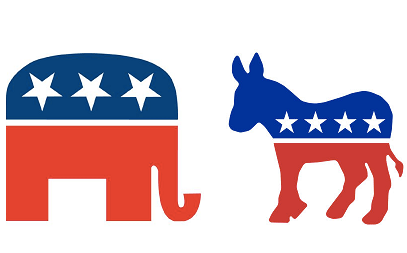
It’s done. It’s in the envelope. Now I just need some government workers to enter it into the system.  I am now a registered Democrat.

Decades ago I first registered to vote as an Independent.  The flawed ideology of both parties did not accurately reflect my beliefs and values.  I preferred to cast my ballots based on my own study and analysis, not according to a preset, reflexive party line.  After a few elections I realized that my Independent status in New York kept me from voting in primaries.  I wanted to participate in selecting our representatives so I faced my options: Democrat or Republican.
Screen Shot 2017-07-24 at 9.18.43 PM

At the time, the late 70’s or very early 80’s, I no longer recall precisely,  “Rockefeller Republicans” still existed or at least were rumored to exist.  My understanding of their philosophy- a social conscience with fiscal responsibility- fit my beliefs better than Democrats who appeared to simply throw money at problems, an expensive and not necessarily effective approach. So I changed my status from Independent to Republican.

Despite the change in name, I kept my independent approach to candidates. As the years passed I realized I did not vote in that many primary elections.  Frequently the reason was that the outcome was predetermined before NY had a chance to vote.

I watched as what I once thought were Republican values morphed into something different. Something meaner, something lacking understanding and compassion, something fueled by big money, something manipulating power instead of serving the people.  Ronald Regan made me nervous.

In the 90’s, I listened to radio news reports on my brief morning drive, furious that Newt Gingrich shut down the Federal Government: to what end? To simply prove a point?  His actions were a simple demonstration of power not meant to serve the public.

I increasingly chafed under the self-designated Republican label.  I never voted solely along party lines. My only regular act as a Republican was signing petitions proffered by neighbors to nominate people for local offices.   Why was I still a Republican?

My distaste swelled as the Republicans openly thwarted twice elected President Obama.  Indeed, that was their sole stated strategy and purpose.  Who was being served by this intellectually corrupt means of governing?  Not the American people.

And due to this negative, obstructive philosophy the President was forced to use Executive Orders to get things done- anything done.  Yet this proved to be more fodder for the Republican obstructionists as they screamed that the President was a dictator, usurping powers he was not meant to have, accusing a Constitutional scholar of acting unconstitutionally.

In this election cycle, the primary race was not over when New Yorkers were able to vote.  I eagerly selected John Kasich over Donald Trump.

Now Donald Trump is our President.  My mind spins when I read that many voted for him because they were looking for change, and that President Obama did not deliver change.  He did not deliver the change he promised because he had to work with legislators best described as children with power.  By electing Donald Trump, Americans rewarded Republicans for their bad behavior. By throwing an eight-year tantrum, by refusing to play at all, they now have the keys to the car in the form of the Presidency, both Congressional houses and perhaps the Supreme Court, and I am afraid- very afraid- the change we will see is not the change many had hoped for.

I cast an absentee ballot for the first time in my life this year because I volunteered to assist with voter protection in Florida.  As I filled out my ballot, I selected Clinton-Kaine and worked my way across the ballot, gleefully filling out every Democrat bubble along the way.  I may not always vote this way, but I will for the foreseeable future.

The Republicans are serving only themselves. They serve their ideology and not the American people.  I believe in serving others.  My beliefs no longer align with the Republicans, my beliefs no longer allow me to identify as a Republican for any purpose.  So I switched, and you can too.


Hard to Reconcile

Enough is enough.

More people dead, many people dead, an infant, children, elderly, relatives, friends, all in the midst of expressing their faith in a small Texas church, all now dead at the hand of a gunman with the desire to kill to avenge some perceived wrong.

And just a few days earlier, death came at the hands of a driver intent on making a point, destroying a beautiful fall day, careening down a bicycle path leaving mangled bikes and people in his wake.

This is the real American carnage and it rightly evokes sadness, rage, and compassion for the victims and their families as they face the consequences of randomly expressed violence.  Yet the public’s and politician’s reaction to how each of these horrific events should be addressed and what burden the public is willing to bear differs in ways that can not be readily reconciled. The juxtaposition of these recent events highlights both why they are the same and why they are so different.

Since the September 11 attacks, Americans have willingly become more vigilant about their surroundings- saying something when we see something- and have accepted incursions on our freedoms to ward off the next possible terrorist act.  The Patriot Act allowed unprecedented intrusions into our privacy, and violated some of our Fourth Amendment rights.  While most of those invasions have been rolled back, our lives have changed in ways we now accept because they make us feel safe.  Armed servicemen and women watch over us as we come and go from New York City’s Penn Station.  Police Departments arm themselves with increasingly sophisticated weapons and means of surveillance.  In NYC, large batches of patrol cars line the streets in anticipation of an attack or to ward off potential attackers, and take off like a swarm of bees, sirens blaring, lights flashing, as part of the new street normal.  And cameras are everywhere, watching our every move.  We like the cameras because they help us track the movements of bad actors, most famously, the Tsarnaev brothers’ actions on Boylston Street finish line of the Boston Marathon.

While meant to protect us, the increased police and military presence has eroded our way of life.  Those of us old enough to remember probably could not have fathomed seeing gun toting military in our civilian settings.  The police swarms both increase our comfort level and rob us of autonomy.  The cameras that track the bad actors track us as well.  Who knows when the cameras will be interested in what I am doing or what you are doing? Looking at the big picture, it is reasonable to argue that we are sleepwalking towards a military/police state, with Big Brother components, just like many novels predicted.  We have traded freedom for perceived safety.

But what are we making ourselves safe from?  Fear of “the other”, the terrorist who has traveled from abroad or percolated in our midst?  Or is it random death in a mass execution?

If it is the random death, why do we treat the mass shootings differently than the car driving terrorist?  Both leave innocent people dead, people who were simply participating in their everyday lives.  Both are indiscriminate.  Is the difference simply that terrorists kill to support an ideology we find contrary to our values?  Or is it the illusion that we will be losing protected freedoms if we take measures to limit the free range use of guns?

We know that far more people have died in shootings in the US than have died at the hands of terrorists.

Yet due to a vocal lobby that terrorizes our elected officials, the NRA, we accept the idea that we are impotent to implement changes that may save lives.  And all because the Second Amendment cannot be interpreted in a common sense way to protect innocent people.  It has become the most sacred of all Amendments.  I doubt the Founding Fathers foresaw or intended that construction.

We willingly sacrifice freedoms due to the threat of terrorism, but our government and many Americans are not willing to make legitimate rules and regulations regarding gun sales, ownership and safety.  Some will argue that the increased military and police surveillance and presence has made us safer, and I agree.  So why can’t we accept some restrictions on guns if they will make us a safer society?

To those who argue that murder can be accomplished with a variety of weapons, I agree there are many ways to kill someone. However, there is a reason we have not had an epidemic of mass murder by machete. The ability to kill people from a safe and significant distance, as in Las Vegas and the Texas clock tower, and the devastating effects of an accidental gun discharge demonstrate that guns differ from other weapons.

Drafting laws and regulations to prevent gun violence must be evidence-based because data collection and interpretation is the gold standard to demonstrate the efficacy of new social programs. Indeed, it took proof and decades of incremental changes to make our cars safer and to walk Americans back from their tobacco addiction to better health.

What will be the most effective steps to curb deaths by guns?  What licensing, ownership, training, and storage rules could be most readily implemented and enforced to limit the endless bloodshed?  Gun related violence is a topic that desperately needs investigation, yet we allow the NRA to bully Congress and hobble the Center for Disease Control by preventing the funding needed to investigate. Gun violence can rightly be called an epidemic, yet the NRA and its exaltation of the Second Amendment prevent us from studying it to craft common sense cures.

As a society we often need to make some sacrifices for the common good.  We have made sacrifices to protect ourselves from terrorism.  We cannot allow a fearful, hyper-vocal group stop us from saving American lives, lives that are lost due to our inaction.  There is no simple answer, but as a first step, we must demand that scientists gather and analyze the data that will allow us to develop paths to reduced gun violence.

Harmless Heritage?

When I was on the cusp of adolescence, my father worked in Florida for a few years. One summer, and over a few school year vacations, we drove South from our New York home to be with him.

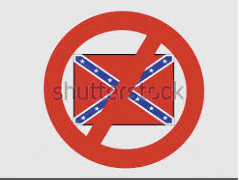
On one trip, we stopped in a restaurant in a southern state – I no longer remember exactly where we were.  As my family was led to a table and presented with menus, I stared at the décor on the walls.  I did not understand it all.  The entire restaurant was festooned with Confederate flags and other memorabilia related to the Civil War.  I could not wrap my head around what I was seeing.  I recall asking, “Don’t they know they lost the war?”  It never occurred to me that people would view losing a war as part of their heritage to celebrate, especially when the war was fought over a practice now universally considered not only to be wrong, but also morally repugnant.  I no longer remember my parents’ reply, but I do recall getting the impression we were not in a good place to discuss my question.

Screen Shot 2017-08-29 at 3.34.25 PM.png

I still don’t understand it.  I don’t understand communities commissioning and erecting statues of the leaders of the Secession, decades after the close of the war.  The Robert E. Lee statue that became the flashpoint in Charlottesville, VA was commissioned in 1917 and not erected until 1924.  Its unveiling was celebrated by a Confederate reunion and a parade of 100 cadets from the Virginia Military Institute in Confederate colors.

Statues of individuals on public lands are meant to celebrate, commemorate and honor the person and their achievements.  They are meant to reflect what is, or was, important to a community.  Regardless of their personal attributes- great leaders, stellar integrity, wonderful battle tacticians- it is plain that all the Confederate generals and leaders are remembered both today and when their statues were built, for their role in that bloody war –which they lost.  Post- war, latter-day erection of these statues glorifying Confederate leaders are plain statements that the sentiments guiding their secession are worth remembering.

I don’t believe removing these statutes is “erasing history”.  Teach all the history you want- how slavery developed in America, how the agricultural states depended on it, how its immorality infected the founding of the United States, how this infection led to the political self-amputation of those who depended on it, how the anti-slavery movement gained momentum, and the number of people who fought and died to end, and to preserve, a reprehensible practice.

I believe these monuments are both reminders of a past that is still longed-for, and a means of intimidation.  I am a nice white lady who grew up in and lived almost my entire life in suburban NY.  I don’t pretend to understand what it feels like to be black in America, or in the American South.  But I feel that public monuments to “leaders” who broke apart the United States and fought and caused others to fight for the “right” to enslave other human beings, must send a message, subtle or not, to at least some black community members who live or work in their vicinity.  And that message is not positive or empowering:  it is “you don’t belong here; you are not equal to us”.

If you don’t believe that, think about this.  What if a city decided to erect a monument to “The Unknown Bus Driver”, to celebrate the city employees who directed all non-white people to the back of the bus?  I think the intended message is the same as all of those Confederate statues: black people should be treated as less than whites. I think virtually everyone can see how celebrating the bus drivers and their actions is morally wrong and cruel.  And if you cannot, you belong with the white supremacist groups who marched, and yes intimidated, people with “harmless heritage”.


Deliver Us from Russia

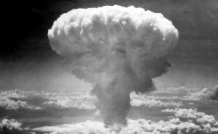
When I was a child, several times each school year an alarm sounded and I crawled under a desk; and later, as a teen, I stood in a hallway in front of a wall of lockers. I was practicing for the drop of The Bomb.  In high school, as I stared facing the gray metal lockers, I thought they looked like tailor-made coffins and I should just step in.  No wonder I am very bothered by former FBI Director James Comey’s June testimony that Donald Trump never expressed concern about the impact of Russia’s interference on our democracy – it was the Soviets who were going to drop The Bomb, the Soviets who made me consider my mortality.

Screen Shot 2017-08-05 at 10.10.54 PM

The Soviets.  The people who divided and walled Berlin, who banged shoes on UN desks, who brought about the Cuban Missile Crisis, who invaded Afghanistan and sent tanks to the streets of their satellite countries – Hungary, Poland and Czechoslovakia – countries whose only provocation was yearning for freedom.

A good part of my life coincided with the Cold War, and I grew into adulthood constantly hearing and worrying about nuclear proliferation. Despite some later warming of relations when the Soviet Union dissolved and curbs were installed on the nuclear arms race, I remained wary of the major Soviet remnant, Russia.  Putin’s ascension to power and recent global conduct revived my concerns.

When I heard that Russians interfered with our Presidential elections, I was angry, upset, and alarmed.  No one, especially the Russians, should interfere with our democracy.  Later, news emerged that not only had the Russians interfered, they had done so intending to make Donald Trump President.

I did not vote for Mr. Trump.  Yet I believe my outrage at Russia’s conduct would exist regardless of the election outcome.  After all, the Russians have never had America’s best interests at heart, even during the warmest points of the Cold War thaw.

I can almost understand President Trump having a moment of anger or disbelief upon hearing the Russians helped him – most people want to think they won a race fairly.  But Mr. Trump didn’t win just any race, he won the Presidency. While Russian interference certainly personally impacted him, this interference is devastating the public’s confidence in our democratic system.  A President who wants to serve and protect America, should also want to investigate foreign corruption of our elections.

Instead, right from the start President Trump has ignored and belittled and tried to divert and hamper any investigation.  He prefers to focus on alleged stateside voting irregularities, which have been proven to be quite rare.  Does this mystifying conduct result from a narcissistic belief he was able to win on his own?  Is there in fact something to hide? Recent revelations that his son Donald, Jr., and top advisor and son-and-law Jared, both met with numerous Russians with the understanding that those Russians had government ties and damaging information about his opponent, Hillary Clinton, make the collusion allegations far more concrete.  President Trump’s decision to gloss over his family’s actions by dictating an inaccurate public explanation for this meeting now makes him complicit in their ill-intentioned gathering.  Evidently Robert Mueller believes there is something to pursue via a grand jury investigation.

As the evidence continues to erupt in a cascading stream, the conduct of President Trump, his top lieutenants, and his family is becoming harder to turn into alternative facts. Many weeks ago, I concluded that Trump knew Jared had done something with the Russians, something perhaps very stupid, and Michael Flynn also knew – that was why President Trump was willing to hold on to Flynn despite his lying and why he wanted Comey to back-off.  I wasn’t too far off – it was his son who had done something both intentional and stupid. Yet I believe insufficient evidence has emerged to conclude Trump himself was involved with the Russians during the campaign (unless you want to include his public request for the Russians to “find” Hillary’s emails).

Knowing Russia is working hard to undermine our democratic systems is frightening. So, President Trump, why aren’t you protecting our country by demanding to know the facts?  A true American leader would want to know, would need to know, what the Russian’s did, to prevent it from happening again. Ultimately, I have a simple request: Don’t protect me from Mexican immigrants and Syrian refugees – protect me from the country that made me and millions of children hide under our desks.


Why I Marched

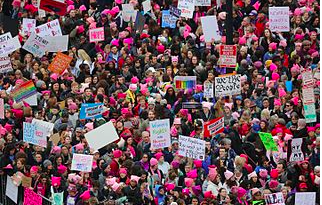
The day after President Trump was inaugurated I marched in New York City with my youngest daughter and my only sister.

Over the next two days I read many of the comments posted on social media and articles written about the worldwide event. I was both saddened and surprised by the misunderstanding and anger towards people asserting their Constitutional right to protest peacefully.

I cannot speak for the estimated 3.6 to 4.6 million women, men and children who marched on January 21, but I can speak for myself, and some of my family and friends who marched.

Screen Shot 2017-07-26 at 6.49.23 PM.png

We did vote.  I did more than vote: I donated money to an election campaign for the first time in my life; I also rang doorbells and made phone calls; and I spent 2 weeks in Florida volunteering to protect the vote.

We are not whiners, sore losers or cry babies.  I have voted in many presidential elections based on my own convictions, not party ideology or gender, and more often than not, my candidate lost.  I have never felt compelled to protest before.

We were not paid by George Soros or any organization.  We chose to march to participate in democracy.

Although organized as a woman’s march, I believe that the overarching theme of the march was not feminism.  I believe the march presented an opportunity to channel the concerns, anger, fear and mistrust created by candidate Trump and now President Trump, towards many groups and rights he has challenged, attacked and treated with disrespect. And so I marched.

I do understand that he is my President.  I am not attacking his legitimacy as our elected leader.  But I do question his continued need to revisit election results.  More troubling is his failure to demand that we immediately investigate the outrageous Russian interference with our democracy. Instead, he focused on the perceived personal slight created by the suggestion that the Russians helped elect him. The locus of his concerns is clear- him, not our country. And so I marched.

I have been urged to give him a chance.  It is hard for me to give a chance to someone who does not treat others with decency; who does not demonstrate an understanding of how our government works; who nominates billionaires who are unqualified to head the agencies they are tasked to lead; who nominates officials who do not support civil rights; who nominates people who do not even understand the scope of the agency they are to head; and who does not model ethical behavior for those he leads by totally separating himself from his businesses. It is hard for me to give him a chance when he believes he could serve as President and still run his business. I am forced to wonder, which one is the hobby?  And so I marched.

Tens of millions used their vote to endorse a man who defies social and political norms. They may say they do not agree with all he says or does, but their votes did not include room for a caveat.  Some Trump supporters, like Mike Huckabee, wish to attribute the views of the few marchers who spoke publically to all the marchers, and that is not reasonable. However,  if that sounds fair to you, I believe it is far more reasonable and logical to hold all those who voted for President Trump responsible for the well-founded fears and concerns he has created about the future, whether it is the loss of health care for millions of citizens; throwing senior citizens on fixed incomes off the stable, effective Medicare system into the abyss of the uncertain costs of the private health insurance market; trade wars with the resulting escalating cost of consumer goods; possible wars on the ground; the further diminishing of civil rights, especially voting rights; the vast waste of resources to build a border wall; and the soon to be irreversible effects of climate change.  And so I marched.

Congressman  John Lewis has quoted Martin Luther King Jr as saying, “nothing is more powerful than the rhythm of marching feet”.  That rhythm and the sight of an endless sea of people asserting their voices are what make America great.  And we will not now sit back and wait to see what comes.  We will be vigilant, vocal and we will vote.